| Title - $10.99 |
 Photo by Khaled Habib Photo by Khaled Habib
|
February 2007
Encouraging Development
By bringing together international institutions, local reformers and private partners, the development sector in Egypt is set to finally see some results
By Andrew Bossone
Most people know the Chinese proverb about the value of teaching a man to fish rather than giving him one, but there is a similar proverb in Arabic that originates in Egypt: “The noblest charity is to preclude a man from accepting charity, and the best alms are to show and enable a man to dispense with alms.”
It appears these old proverbs are finally coming into fruition: In the past three decades, foreign governments and aid agencies have poured money into development projects in Egypt — only to complain that after the donor stops sending money, the project falls apart.
More >>
Back to top |
| Title - $10.99 |
 Photo by Omar Mohsen Photo by Omar Mohsen
|
January 2007
Virtual House Calls
A new pilot telemedicine program in a remote village is just the beginning of a bid by global tech giants to transform societies worldwide, Intel’s CEO tells Business Today Egypt in an exclusive interview
By Andrew Bossone
Some say ignorance is bliss, but don’t tell that to technology titans Intel and IBM. The two computer hardware firms are investing heavily in the concept of patient-centric healthcare, where individuals have better access to medical services and information in their medical records. It’s not just about patient empowerment, though: IBM and Intel believe this is part of the solution to the global problem of surging healthcare costs.
More >>
Back to top |
| Title - $10.99 |
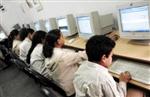 Photo by Khaled Habib Photo by Khaled Habib
|
March 2007
Bit-by-Bit: A Story of Bytes and Books
The world’s IT giants are lining up to buy into the Egypt’se-schools initiative —two are even feuding for a piece of the pie
By Andrew Bossone
Some say it takes a village to raise a child, but what about the whole country raising one? That’s the idea behind putting technology in schools under the Egyptian Education Initiative (EEI), which began at the 2006 World Economic Forum in Sharm El-Sheikh.
Under the first phase of the initiative, which will last for three years, 2,000 of the nation’s 36,000 schools will be equipped with computer labs and high-speed communication infrastructure. The idea is that once the entire country’s schools are wired together by computers, a community of teachers, students, parents and experts will be able to address many of the issues facing Egyptian education today.
“Technology is only a tool,” says Hoda Baraka, deputy minister of communications and information technology (MCIT). “When you give the students and the teachers IT in the schools, you can have more methodologies for learning. If you would like to have a connected community, then technology will give you the platform.”
Of course IT on its own is not a panacea for the many challenges Egypt’s ailing education system now faces. It has to be part of a larger program of reforming the curriculum, training teachers and improving the overall quality of schools. At the very least, though, implementing IT in schools will be important for improving basic skills such as reading and writing, especially since the national literacy rate still remains below 60%.
More >>
Back to top |
| Title - $10.99 |
 Photo by Khaled Habib Photo by Khaled Habib
|
March 2007
Credit Where Credit is Due
A new credit bureau will allow more consumers access to a range of financial services, with far-reaching implications for the Egyptian economy
By Andrew Bossone
The un-banked portion of our own population find loan requests blocked by bank requirements calling for salary levels, bank accounts and sometimes even collateral that they do not have. To get the money they need, many Egyptians turn to the gaam’eya, the home-grown borrowing collective that is similar to the susu in the West Indies, tanda in Mexico and kaes in Korea.
In a gaam’eya, a small group of people agree to each contribute a set amount each month, with a different person collecting the total every four weeks. There’s no official paper work, no collateral requirement and no minimum income needed, just a handshake agreement among the participants. It’s a common practice across the social spectrum, from children to adults, street sweepers to salesmen. Whether it’s a religious practice, as some argue, or simply a folk custom, the gaam’eya serves as an alternative to the formal banking system of lending, of which many consumers have negative perceptions.
More >>
Back to top |
| Title - $10.99 |
 Photo by Dana Smillie Photo by Dana Smillie
|
January 2007
Grow Green
Agricultural niche players Sekem and Wadi Foods have discovered green isn’t just an eco-friendly trend — it’s also the color of money
By Andrew Bossone
It’s often said that the largest of trees comes from the smallest of seeds. When Ibrahim Abouleish opened the Sekem Farm on a plot of empty desert, his critics must have thought he was crazy. But now, with a network of crops covering more than 70,000 acres of organic farmland, he is all smiles.
To celebrate the twenty-ninth anniversary of the Sekem project, Abouleish stood proudly on the stage of his farm’s amphitheater with his son Helmy by his side and an audience of prominent business leaders, biologists and Minister of Agriculture and Land Reclamation Amin Abaza in attendance.
“To start from nothing 29 years [ago] to go to around 70,000 or 80,000 acres [28,300 or 32,300 hectares] now — having in mind that we want to go to 6 or 7 million acres [2.83 million hectares] in Egypt — it is still at the beginning of the road,” Helmy Abouleish says. “But I see the momentum.”
More >>
Back to top |
| Title - $10.99 |
 Photo by Mohsen Allam Photo by Mohsen Allam |
January 2007
Year of the Technophiles
If ever you had a doubt, Egyptian consumers have proven it once and for all: They are, like almost everyone else across the globe, tech junkies.
By Andrew Bossone
I feel like a guy in front of a store window, jaw dropped, gawking at the newest mobile phones. I’m no longer shocked when a taxi driver pulls out his mp3 player or when I see a television screen mounted inside a car. If the last few years brought new tech toys into the country, then 2006 was the year we could finally use them. One could easily overstate the significance of all these gadgets, but the fact that technology giants, including Intel, Microsoft and Google, are sending their CEOs here means these companies respect the significance of the Egyptian market.
“If you look at the structure of the internet, Egypt is at center of one of the most important highways,” Google CEO Eric Schmidt said at a recent gathering in Cairo. “By the way, so everybody knows, it’s the Suez Canal. You thought the Suez Canal was important for boats? It’s important for fiber [cables] because the fiber goes right through it. And so the fact that [Egypt] is so central to the structure of the internet, it’s very helpful in terms of having broadband and bandwidth for the kind of technology we’re doing here.”
More >>
Back to top |
| Title - $10.99 |
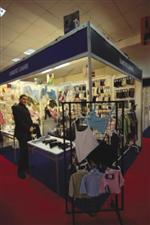 Photo by Kim Piper Photo by Kim Piper
|
December 2006
Threading the Gap
In two years’ time, the QIZ will be a dead letter for Egyptian textile exporters. That’s just 24 months in which to solidify relationships with US importers and start preparing for massive new competition from Chinese and Indian players.
By Andrew Bossone
Sometimes, it’s not just about technology. Instead of spending their time calculating thread counts or sitting at a spinning wheel, the nation’s leading textile players are debating issues including vertical integration and adding value to cotton while simultaneously bracing themselves for what many analysts think will be a revolutionary change in the industry.
And that change will be spurred by foreign developments: In 2007, the European Union will completely open its markets to textiles and ready-made garments. The United States is set to follow suit by the end of 2008, a pledge US President George W. Bush affirmed during his recent trip to Asia. The result: Western consumers will be inundated overnight with Chinese goods, and no one expects other industries to be competitive with China and its 47 million textile workers.
As matters now stand, the Qualified Industrial Zone (QIZ) agreement with the US is helping prop up the domestic textile industry by eliminating tariffs to the US provided the Egyptian goods made by qualified companies contain at least 11.7% Israeli content and 35% local value-added.
More >>
Back to top |
| Title - $10.99 |
 Photo by Mohsen Allam Photo by Mohsen Allam
|
November 2006
Super Sizing Egypt?
News Analysis: Under attack abroad for its contribution to the Western world’s obesity problem, McDonald’s is changing eating and consumer habits in Egypt, too
By Andrew Bossone
DRIVING SOUTH ON highway I-95 on the United States’ East Coast, it’s easy to tell when you pass a town: The giant golden arches of McDonald’s hover near the road exits. I-95 runs from the northernmost state, Maine, to the southernmost, Florida, with many changes of scenery along the way. But what’s constant in every town is the dominance of fast food chains.
On a trip a few years ago, I counted the number of Waffle House restaurants, 24-hour southern breakfast diners with distinguishably tall, black-and-yellow signs; I stopped counting somewhere around 37.
The remarkable uniformity across thousands of miles and towns has given rise to the nickname ‘the United States of Generica.’ New Jersey is so filled with big highways, gated communities and strip malls that when people say they live there, the next question is not, “Where in New Jersey?” but “Which exit?”
Is the same thing happening here? Uniform housing communities are popping up from Sinai to Sixth of October, from the eastern stretches of the North Coast straight down the Red Sea. A good way to tell you have reached Ain Sokhna from Cairo is when you see the KFC sign in the distance. Heading to the World War II battlefields of El-Alamein? Fast-food eateries welcome you off the desert highway.
More >>
Back to top |
|

 Photo by Mohamed Allouba


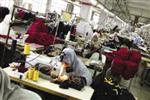






 Photo by Mohamed Allouba